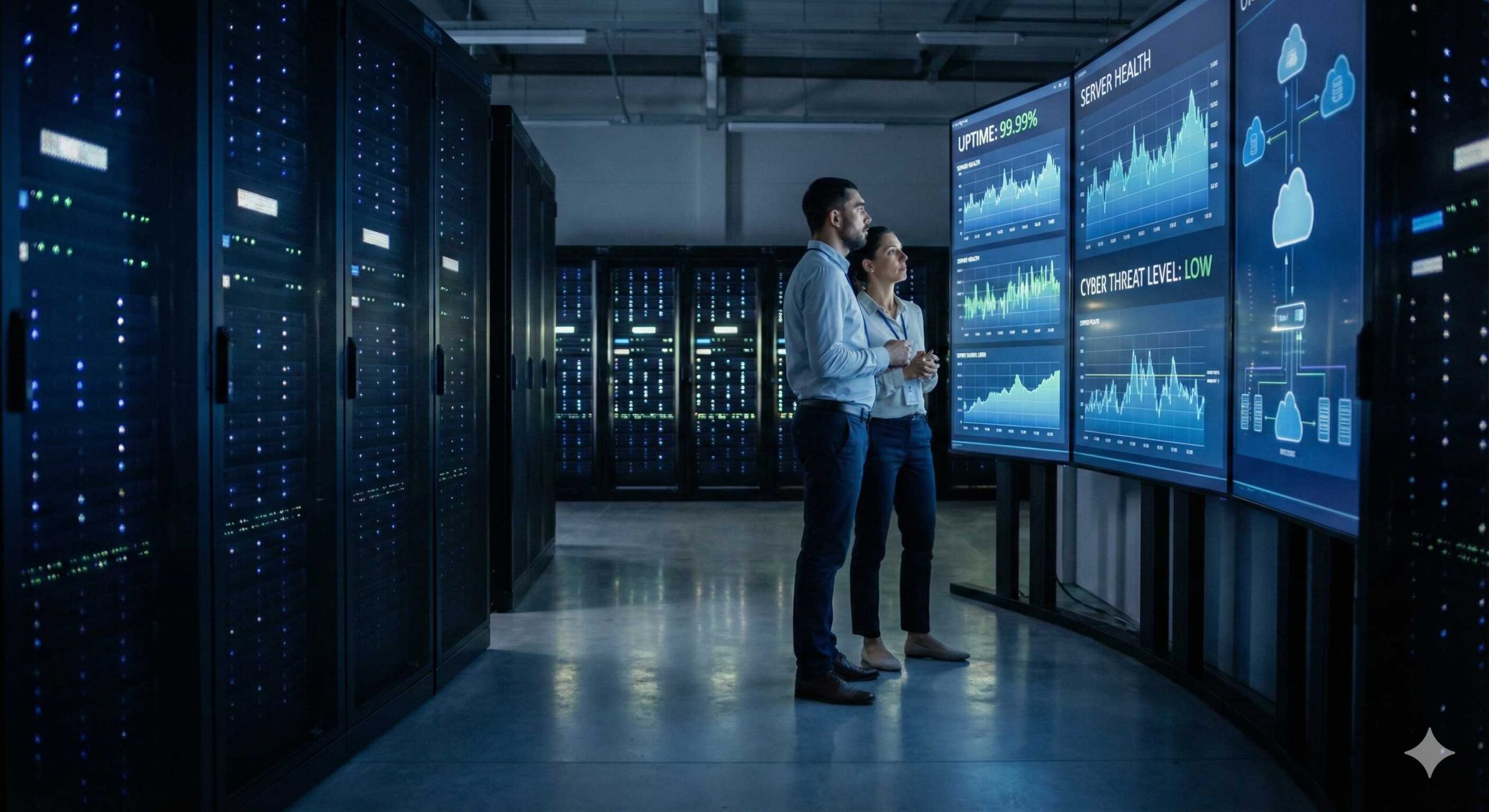
In today’s digital-first world, downtime has emerged as one of the most important problems affecting customer satisfaction, business productivity, and operational efficiency. A system failure that lasts even a few minutes can lead to decreased consumer trust, interrupted workflows, and lost income. Reducing downtime is not only a technical necessity but also a strategic imperative for companies operating in a highly competitive market like the United States. Modern server administration solutions can help with this. These solutions give businesses the stability and visibility they need to maintain smooth operations through automation, real-time monitoring, and predictive analytics. When used properly, Server Management in the U.S.A. can help businesses improve their IT infrastructure, lower errors, and remain ready for unforeseen problems that could affect their systems.
Why Do American Businesses Experience Downtime?
Hardware malfunctions, antiquated infrastructure, hackers, overloaded servers, and ineffective monitoring can all cause downtime. Even a little problem can soon become out of hand if server Management in the U.S.A. is not done correctly.
Why U.S. Businesses Are Still Affected by Downtime in 2025
Many American companies still experience outages because of antiquated systems, inadequate monitoring, or a shortage of IT personnel, despite technological breakthroughs. Vulnerable systems are also the target of cyberattacks like ransomware and DDoS attacks, which result in abrupt disruptions. Additionally, businesses that lack automated procedures or rely on manual server checkups sometimes have delays in finding problems. Even small bugs might develop into significant system failures if a proactive strategy is not taken. In order to avoid downtime, firms must implement more intelligent technologies and contemporary procedures.
Modern Monitoring Tools’ Function in Reducing Failures
A key component of contemporary server management is real-time monitoring. These days, tools can monitor network activity, CPU utilization, temperature spikes, inbound traffic, and anomalies throughout the server environment. When odd patterns emerge, they instantly notify IT personnel, allowing for prompt action before issues get worse. AI-driven analytics that recognize early warning indicators and learn from past trends are also a feature of many monitoring systems. Businesses may avoid disruptions, cut down on troubleshooting time, and enhance system performance with this degree of insight. Server Management in the U.S.A. becomes more effective and proactive rather than reactive with enhanced monitoring.
Automation as a Crucial Factor in Decreased Downtime
Managing servers by hand takes a lot of time and is prone to human mistakes. Businesses may automate typical processes like software upgrades, security patching, server optimization, and performance checks with the help of modern tools. Without the need for IT personnel to manually carry out critical updates, automation guarantees that they occur on schedule. This minimizes vulnerability windows, stops performance deterioration, and gets rid of needless downtime. Recovery is greatly aided by automated backup systems, which guarantee that important data is safely preserved and can be promptly restored when necessary. Automation increases reliability and maintains consistent system performance by reducing human labor.
Centralized Multisite Operations Dashboards
Many expanding companies in the United States use hybrid infrastructures that combine on-premises servers, cloud platforms, and edge devices, or they operate across many locations. It can be quite difficult to manage each of these systems independently. Centralized dashboards facilitate the integration of server management and monitoring into a single interface. No matter how many servers or locations the company has, IT teams can monitor security, performance, and usage from a single location. In addition to saving time, this centralized design lowers the possibility of overlooking important signals. It makes Server Management in the U.S.A. more efficient by streamlining the process, especially for medium-sized and large businesses.
How Smooth Performance Is Ensured by Load Balancing
Another crucial component that lowers downtime is load balancing. Servers may get overwhelmed when traffic suddenly increases: for example, following a product launch, marketing event, or seasonal spike. Slow performance or total shutdowns are frequently the outcome of this. By distributing incoming traffic equally among several servers, load-balancing technologies prevent any one server from becoming overloaded. This ensures that even during times of heavy demand, websites, apps, and online services continue to function properly. This significantly enhances user experience and safeguards income for customer-facing platforms.
Tools for Business Continuity: Backup and Disaster Recovery
Unexpected catastrophes like data corruption, hacks, technology malfunctions, or natural calamities can immediately halt business operations. By reducing data loss and operational disruption, modern backup and disaster recovery systems guarantee that businesses can promptly resume operations. Businesses can recover with little disruption thanks to automated backup plans, safe cloud storage, and quick restoration solutions. After an incident, these systems are essential for maintaining continuity and avoiding protracted downtime.
Benefits of Implementing Modern Server Management in the U.S.A
Improved uptime, lower maintenance costs, stronger cybersecurity, and more scalable infrastructure are just a few benefits of implementing contemporary server administration technologies. Companies benefit from increased system management, quicker threat detection, and more seamless operation. In the end, these enhancements aid businesses in maintaining their competitiveness, satisfying client demands, and fostering long-term expansion.
In conclusion
Downtime is expensive, erratic, and frequently avoidable. U.S. companies can improve their visibility, automate critical processes, and guarantee continuous performance by utilizing contemporary server management software. Disaster recovery, load balancing, centralized dashboards, automation, and real-time monitoring are some of the features that lower risks and boost productivity. With robust and up-to-date Server Management in the U.S.A., businesses can run efficiently, prevent needless interruptions, and create a more robust digital infrastructure that promotes long-term success.